AI in audit fieldwork: what to leave to it and what not to
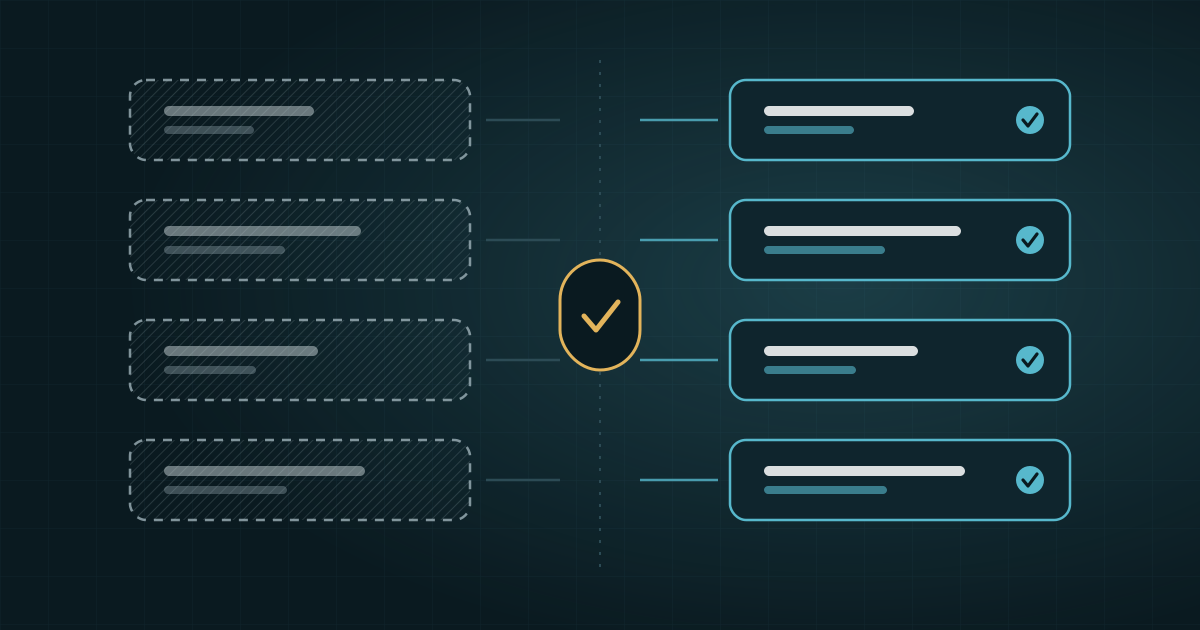
AI is offered to audit firms today as the answer to everything. The more useful question for a partner or manager is: which parts of fieldwork can it help with safely, and which stay with the auditor and with fixed rules? This is our view at Zimam. We offer it for you to discuss and test, not to accept on trust.
Start with a fact: AI makes mistakes. It can misread a figure on a scan, and it can draft a note that does not fit the case. So the question is not "does it err?" but "what happens when it does?"
What suits it, provided the output stays a suggestion
- Classifying uploads: invoice, bank statement, receipt voucher, trial balance.
- Reading fields from scanned documents: invoice number, date and amount, with the place on the page shown so you can see it for yourself.
- Proposing a mapping of trial-balance accounts to statement lines, or of a bank statement to its account.
- Drafting text from supplied facts: a message to the client, the wording of a note, a description of work performed (drafted only from the actions actually recorded, and reviewed and signed by the preparer).
- Proposing a materiality benchmark and percentage with a written rationale, as your firm's templates would, while setting materiality stays with the auditor (ISA 320), who accepts or changes it.
What we do not leave to it
- Totals, differences and samples. They are computed by explicit rules that give the same result from the same inputs, so a reviewer can rerun and check them. Sample selection in particular must be documented so an experienced auditor can understand and repeat it (ISA 230, ISA 530); a language model that answers differently each time cannot do that. The same goes for a total: a figure in a working paper must be the output of a calculation that can be traced, not an "answer" from a model.
- Setting materiality. AI may propose a basis and percentage as a draft, the engine computes the amounts, and the auditor decides.
- Closing an exception or treating it as explained.
- Judging the sufficiency and appropriateness of audit evidence, going concern, or giving the opinion.
The reason is professional before it is technical: responsibility for professional judgement and the opinion stays with the auditor (ISA 200), and a tool that carries no responsibility should not decide.
Five controls to ask of any tool
- A source for every value. What the tool reads links to its place in the document, so the auditor checks in seconds, not hours.
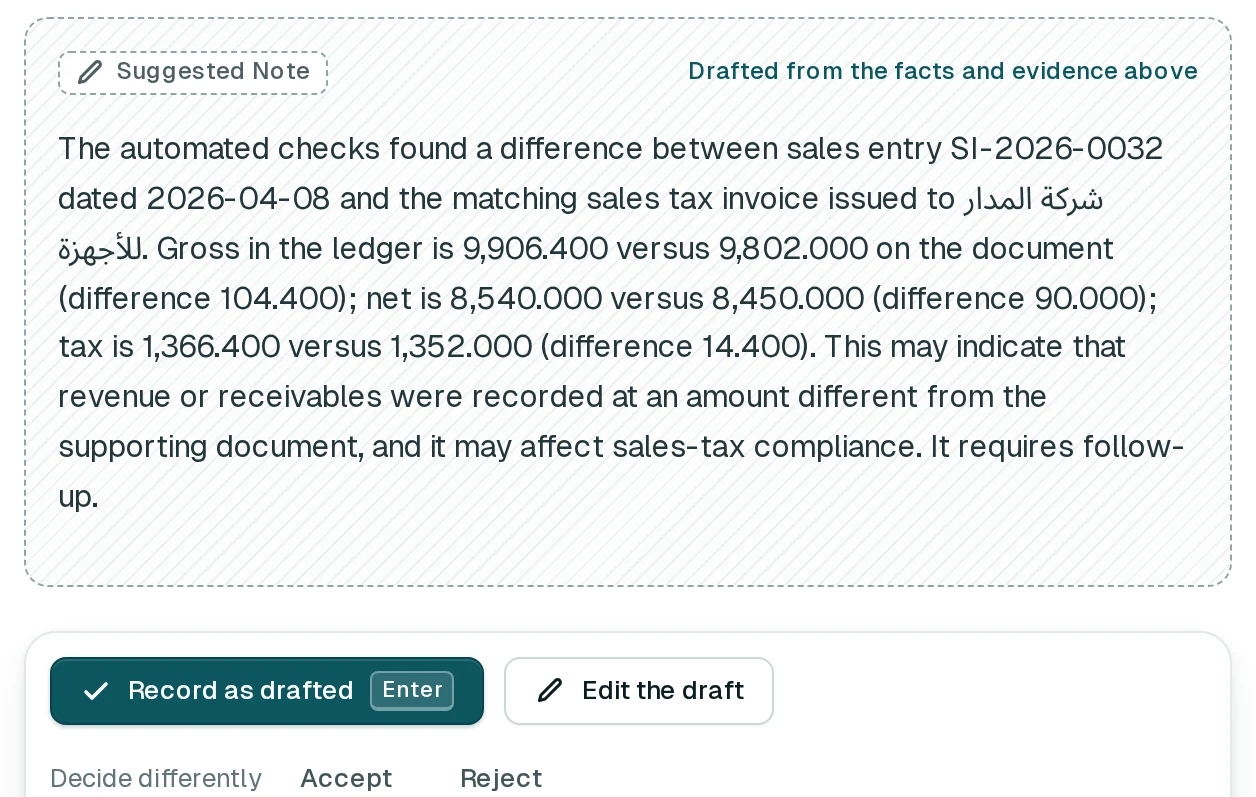
- A suggestion until a named person accepts it. Nothing closes automatically, and for each suggestion the record shows whether it was accepted as it stood, edited or rejected, and by whom.
- Numbers from repeatable rules. If a figure changes between two runs with no change in the inputs, do not trust it.
- Undo as a record, not a deletion. Reversing an acceptance is a new event; it does not erase the trail.
- Measure on your own documents. Try the tool on a completed engagement (with the client's consent, or anonymised, according to your firm's policy), count what needed correcting, and note how long it took. Do not believe an accuracy percentage you are handed, ours included: we publish none because we have no measurement on Jordanian firms' files, and we will show you what we measure in the pilot as it is.
A test you can run in a week
Before you allow any tool in your firm, test it like this:
- Choose a completed engagement, with the client's consent or anonymised according to your firm's policy, together with your approved working papers.
- Run the tool on the same documents without showing it your earlier results.
- Record everything that needed correcting, its type (a wrong reading, a wrong mapping, wording that does not fit) and the time it took.
- Show the result to your firm's reviewer and let them decide whether your files can bear this amount of correction.
The result belongs to your firm and your files alone, and it is more reliable than any presentation.
Data questions for any vendor
Client files are confidential, and some tools read your documents through an external AI provider. Ask for written answers:
- Which provider reads the documents, and where are they processed?
- Does the provider retain the content, and for how long? Is it used to train models?
- Who inside the vendor can open our files?
- What happens to the data when the subscription ends, and how do we get a copy?
- What happens when AI is unavailable: can we keep working without it?
- What are the contractual terms, and what limits the vendor's liability?
These apply to us too. As of November 2026, what we say today: we accept real client files. They are stored on servers of our hosting provider, DigitalOcean, in the United States. Among Zimam's users, only members of your firm can reach them, and Zimam's operations team looks at them only when support or maintenance requires it. Page images and text from documents are sent to our AI provider, Anthropic, to be read, and this processing takes place outside Jordan. By default the provider deletes them within 30 days, and it may keep content its safety systems flag for longer. Before any firm uploads a single file, we answer its questions about subprocessors, retention and deletion in writing at pilot@zimamaudit.com.
How we apply this in Zimam
In Zimam, everything AI suggests appears "in pencil" until an auditor accepts it, when it becomes "ink" with their name on it. AI does not calculate a total, a difference or a sample; those run on fixed rules, and the amounts it reads from documents stay suggestions until you accept them. Every value opens the page it came from. No exception closes without a decision recorded by an auditor with a comment.
In short
AI in audit should not be judged by what it can do on a good day, but by what happens on a bad one: is the error visible, can it be corrected, and does the decision stay with the person who carries the responsibility?
This article is general information, not professional advice; it does not replace your firm's methodology or the auditing standards adopted in your country.