Before client data reaches the AI: what Zimam masks, what it does not, and how we tested it
Once a partner accepts that AI makes mistakes, the next question is usually about data: what leaves the firm when we use it? Part of our answer is masking. Before Zimam sends text to its AI provider for the tasks listed below, it replaces the personal identifiers it detects with placeholders, and puts the real values back only inside Zimam. This post sets out what is masked, what is not, and how we tested it. We offer it for you to question, not to accept on trust.
Masking has limits, so we state them first. Page images that the AI has to read, such as scanned invoices, are sent as they are, together with the text on those pages, so names and numbers printed on them can still reach the provider. Text you ask Zimam to translate is also sent as it is. Amounts, dates and references are sent, because matching depends on them. For that reason we do not say that the AI never sees client data, and we do not say that data is anonymised. Neither is true.
How it works: replace before sending, restore after
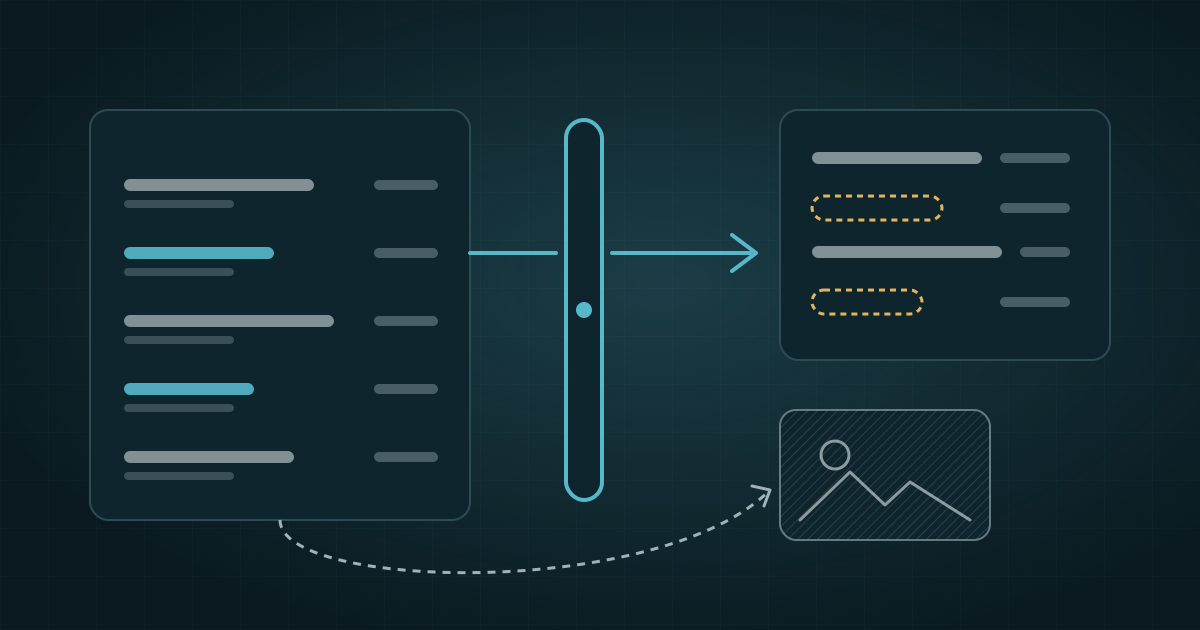
- Find. Zimam's own code looks through the outgoing text for personal identifiers.
- Replace. Each one becomes a numbered placeholder such as {{P1}}. The same text always gets the same placeholder, so the model can see that two lines mention one party without seeing its name.
- Check. A second pass looks again for phone numbers, email addresses, IBANs and similar patterns that slipped through. It does not look for names. If it finds anything, the request is not sent.
- Restore. When the answer comes back and Zimam has checked it, the original text is put back in place of the placeholders, inside Zimam only. The auditor sees the real names. The table that links placeholders to values exists in memory for that one request and is not stored or logged.
Two design choices matter. First, no AI is used to do the masking: that would mean sending the data out in order to protect it. It is ordinary code, with patterns for the shape of an email address, a phone number or an IBAN, and a list of the names Zimam already holds for the engagement. Second, masking does not change who decides. What the AI returns is still a suggestion in pencil until an auditor accepts it, every amount is still calculated by fixed rules, and every value still opens the page it came from.
What is masked
Masking applies to the text Zimam sends for these tasks:
- Investigating a possible match: ledger descriptions and counterparty names, and the text of candidate documents and bank lines.
- Explaining an exception: the client's name, account names, descriptions and counterparties.
- Drafting a message to the client: the client's and the firm's names.
- Proposing how to import a file, and its currency: the text in the sample rows.
- Linking a bank statement to a ledger account: the text of the sample rows and the candidate account names. The client's name is kept here, because matching the account holder with the client is the task.
In that text, Zimam detects and replaces:
- Names it already knows: the client and the firm, the counterparties in the ledger entries, and the name fields of the engagement's documents (the Arabic and English names on one document count as one party).
- Patterns that are easy to recognise: email addresses, Jordanian phone numbers, IBANs and card numbers.
- Numbers and addresses that follow a label, such as national number, passport number, residence or work permit, bank account number, or "Address".
What is not masked
- Page images, and the text on those pages. To read a scanned invoice or a PDF, the AI receives the page as an image, with every name and number printed on it. Zimam has no way to find a name on a scan without sending the scan somewhere, so images go as they are. The client's name travels with them, because the task needs it.
- Text sent for translation. Masking made translations worse (see the test below), so what you ask Zimam to translate goes as you typed it, including any name or number in it.
- Names it does not know. A person's name that appears only in a bank narrative is on no list, and the list is fuller when Zimam runs the whole pipeline than when you start a single task by hand. Zimam masks only what it can recognise.
- Numbers and addresses without a label. A bare ten-digit number is not treated as a national number, and an address with no "Address" label before it is not found.
- Amounts, dates and references. Invoice and entry numbers, transfer references, tax numbers, dates and amounts are sent as they are, because matching depends on them.
- Bank names and generic labels, such as "cash customer".
- Materiality proposals are built from banded figures with no names, so there is nothing in them to mask.
Masking reduces what the provider receives. It does not change where the rest is processed or how long the provider keeps it (see the last section). Whether it changes anything in your firm's legal analysis is a question for your lawyer, and we do not claim that it does.
How we tested it, and what the first test showed
The question is not only whether masking finds the identifiers, but whether the AI's work gets worse when it cannot see them. The model does not give identical answers on every run, so we compare masked runs with an unmasked reference run, and unmasked repeats with the same reference. The rule was written into the test script before the run: masked answers must agree with the reference at least as often as unmasked repeats do. On 16 November 2026 we ran this on our synthetic demo company: one reference run, three unmasked repeats and three masked runs. We also searched every saved result for a leaked placeholder.
- Investigating an unmatched ledger entry: the same leading hypothesis in every run, masked or not. But the demo has only two such items, so the test cannot show a small drop. We treat it as a first check, not as evidence.
- Explaining exceptions: across 33 exceptions, masked runs gave the same suggested risk rank as the reference in 98 of 99 comparisons, the same as unmasked repeats (98 of 99).
- Translating the auditor's text: failed. Similarity to the unmasked translation was 0.79 on a 0 to 1 text-similarity scale, against 0.93 between unmasked repeats. Translating Arabic into English, names stayed in Arabic script, because a model cannot translate a name it cannot see, and the legal form was split from the name ("LLC", "ذ.م.م"), so some sentences came out mixed or garbled. That result is why translation is not masked.
No placeholder leaked into any saved result, and the second check blocked no request.
What this does not show. It is one run on one synthetic company, in which names were the only identifiers in the matching and explaining tasks, so phone numbers, IBANs and national numbers were not exercised there. Four of the masked tasks were not part of the test: drafting messages to the client, proposing an import, proposing a currency, and linking a bank account. We have no measurement of how masking changes their suggestions. We have not yet checked the detection patterns against examples written by someone who has not seen them. And the figures measure whether the AI's answer changed, not whether it was right: do not read them as an accuracy rate. We publish none.
Our test plan calls for more matching items than two, and for tests of the four tasks above. We repeat the test whenever the masking code, the prompts or the model change, and if a task's suggestions get worse when masked, we take that task out of masking, as we did with translation.
Five questions for any vendor that says it masks
- What exactly is masked, and what is not? Ask for the list in writing.
- Is masking done by code on the vendor's side before anything is sent, or by an AI, which means the data has already left?
- Are page images and scans masked? If so, how does it find a name inside an image?
- If the masking misses something, does the request still go out?
- How was it tested, on what data, and what failed?
We answer these about Zimam in writing, before any firm uploads a file, at pilot@zimamaudit.com.
What we say today
As of November 2026, what we say: masking is switched on for the tasks listed above, and not for the items under "What is not masked". Everything Zimam sends to its AI provider, Anthropic, masked or not, is processed outside Jordan. By default the provider deletes inputs and outputs within 30 days, and it may keep content its safety systems flag for longer. Under Anthropic's commercial terms, your firm's content is not used to train its models. Before any firm uploads a single file, we answer its questions about subprocessors, retention and deletion in writing.
Sources, checked November 2026: our own test run of 16 November 2026 on the synthetic demo company; Anthropic's privacy centre and commercial terms.
In short
Masking is worth having: the less personal data a provider receives, the less there is to protect. It is worth testing: a model that cannot see a name does not always do the same work, as our translation test showed. And it is worth describing by its limits: the identifiers in text can be masked, page images cannot. What comes back from the AI is still a suggestion, every amount is still calculated by fixed rules, and the auditor still decides.
This article is general information about our own product, not legal advice.